

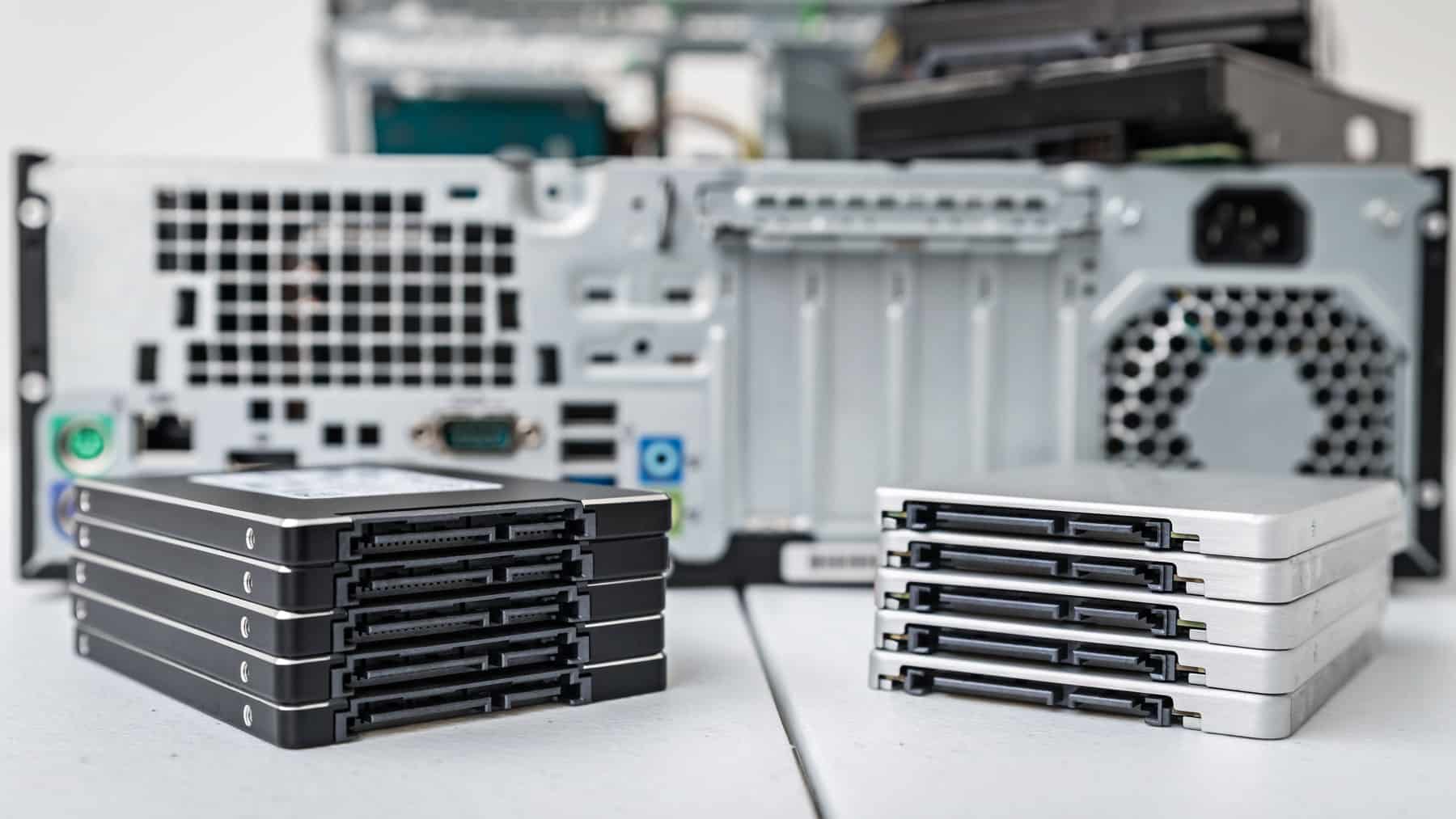
When you retire IT equipment, what happens to the data? For enterprise organizations handling sensitive information, this creates real liability. One leaked customer record or one exposed financial document can trigger regulatory fines, lawsuits, and reputation damage that takes years to repair.
Secure data destruction eliminates that exposure. It’s the verified, certified removal of information from your devices, whether we’re talking hard drives, mobile devices, servers, or network equipment. Consider it the final safeguard for data that’s outlived its usefulness.
Why Data Destruction Matters for Asset Disposal
Your retired IT assets hold more than old files. They contain years of business intelligence, customer data, employee records, and proprietary information. Standard deletion doesn’t work. When you drag files to the recycle bin or reformat a drive, the data remains recoverable with basic forensic tools.
Data erasure uses specialized software to overwrite every sector of a storage device multiple times, following strict protocols like NIST 800-88. This method works well for equipment you plan to resell or redeploy. The devices stay functional while the data becomes permanently unrecoverable.
For drives that are damaged, outdated, or contain highly sensitive information, physical destruction offers another layer of certainty. Hard drive shredding reduces devices to fragments small enough that reconstruction becomes impossible. Some organizations use both methods to satisfy strict compliance requirements.
The complexity increases during data center decommissioning. When you’re retiring hundreds or thousands of devices at once, tracking and securing every asset becomes challenging. A single missed drive in a decommissioned server rack could expose your entire operation. Certified data destruction services document every step, from pickup to destruction, creating an audit trail that satisfies regulators and internal security teams.
Understanding Data Destruction Compliance
Regulations set specific requirements for data disposal. HIPAA, GDPR, PCI DSS, and dozens of other frameworks demand documented destruction methods. Violate them, and you’re looking at fines that start at thousands and climb into millions.
HIPAA requires healthcare organizations to ensure PHI remains unrecoverable after disposal. That means documented destruction methods and certificates proving compliance. The rules apply whether you’re disposing of a single computer or clearing out an entire clinic’s worth of equipment.
PCI DSS takes a similar stance on payment card information. Any device that processes, stores, or transmits cardholder data must undergo secure destruction when retired. The standard requires annual audits by qualified assessors to verify your processes meet requirements.
State laws add another layer. California’s CCPA, New York’s SHIELD Act, and similar regulations across other states impose their own data disposal requirements. Organizations operating in multiple states need processes that meet the most stringent requirements across all jurisdictions.
NAID AAA certification provides a framework that covers most regulatory bases. The standard requires scheduled and unannounced audits, a documented chain of custody, employee background checks, and specific destruction protocols. When you work with a NAID AAA certified provider, you’re getting processes designed to meet the requirements of multiple regulatory frameworks simultaneously.
Certificate of data destruction serves as your proof. These documents detail what was destroyed, when, where, and by what method. During audits or incident investigations, these certificates show you followed proper procedures. Without them, you’re hoping nothing goes wrong.
How TAMS Approaches Secure Data Destruction
We’ve processed assets for 22 years without a single data breach. That record comes from treating every device as if it contains critical information.
Our process starts before we touch your equipment. We document everything, including serial numbers, asset tags, device types, and quantities. This inventory becomes part of your certificate of data destruction and creates accountability from day one.
Data erasure uses software that meets or exceeds NIST standards. We verify every wipe and flag any failures for immediate physical destruction.
For physical destruction, we operate mobile shredding units that come to your location. You can witness the process if you want that additional assurance. Hard drives become small enough fragments that reconstruction isn’t feasible.
Our data center decommissioning teams handle nationwide projects with the same attention to detail. We’ve cleared facilities in Virginia, Texas, Oregon, and across the data center rings where hyperscalers operate. Each project gets a dedicated team that understands the complexity of decommissioning at scale.
Portal access gives you real-time visibility into your assets. Check inventory status, download certificates, review reconciliation reports whenever you need them. No waiting for email responses or quarterly updates.
ITAD services extend beyond destruction. We evaluate every asset for reuse potential, maximizing your revenue recovery while maintaining security throughout the process. Buyers pay 10-25% more for equipment we process because our quality control catches issues others miss.
The Business Case Beyond Compliance
Proper asset disposal strengthens your security posture while often generating unexpected revenue.
Electronic recycling keeps hazardous materials out of landfills while recovering valuable resources. Our R2v3 and ISO 14001 certifications verify that environmental protection happens alongside data security.
Revenue recovery from retired assets can be substantial. Equipment that seems outdated might generate thousands in resale value. Our buyer network spans the globe, finding markets for enterprise servers and networking equipment that still have useful life.
Large-scale decommissioning projects require careful safety protocols. Our ISO 45001 certification reflects processes designed to protect workers handling heavy equipment, navigating data centers, and operating destruction machinery.
Insurance requirements for this work are substantial. We maintain the cybersecurity policies and liability coverage needed to handle client data at scale. Many organizations can’t secure this coverage, which creates a significant barrier to entry in the ITAD space.
Working with a single vendor streamlines the entire process. Instead of coordinating multiple providers for pickup, destruction, recycling, and resale, you get one point of contact. One invoice, one certificate, one audit trail.
Partner with a Proven Data Destruction Provider
We’ve been in business for 22 years with zero data breaches across every asset we’ve processed.
Our certifications create accountability. NAID AAA, SERI R2v3, ISO 14001, ISO 45001, ISO 9001, and annual PCI DSS audits mean third parties verify our processes work as promised. These audits happen on schedules we don’t control, examining everything from employee background checks to destruction methods.
Our data center and pickup crews understand that your timeline matters, your security requirements aren’t negotiable, and your questions deserve prompt answers.
Whether you’re retiring a few computers or decommissioning an entire data center, the same principles apply. Document everything. Verify destruction. Maintain chain of custody. Provide proof.
Your data needs protection even after you’re done using it. Contact TAMS Solutions today for a quote on certified data destruction that keeps your business protected and in compliance.